

Tending the land today, so future generations of plants, animals and people can enjoy it tomorrow.
land stewardship
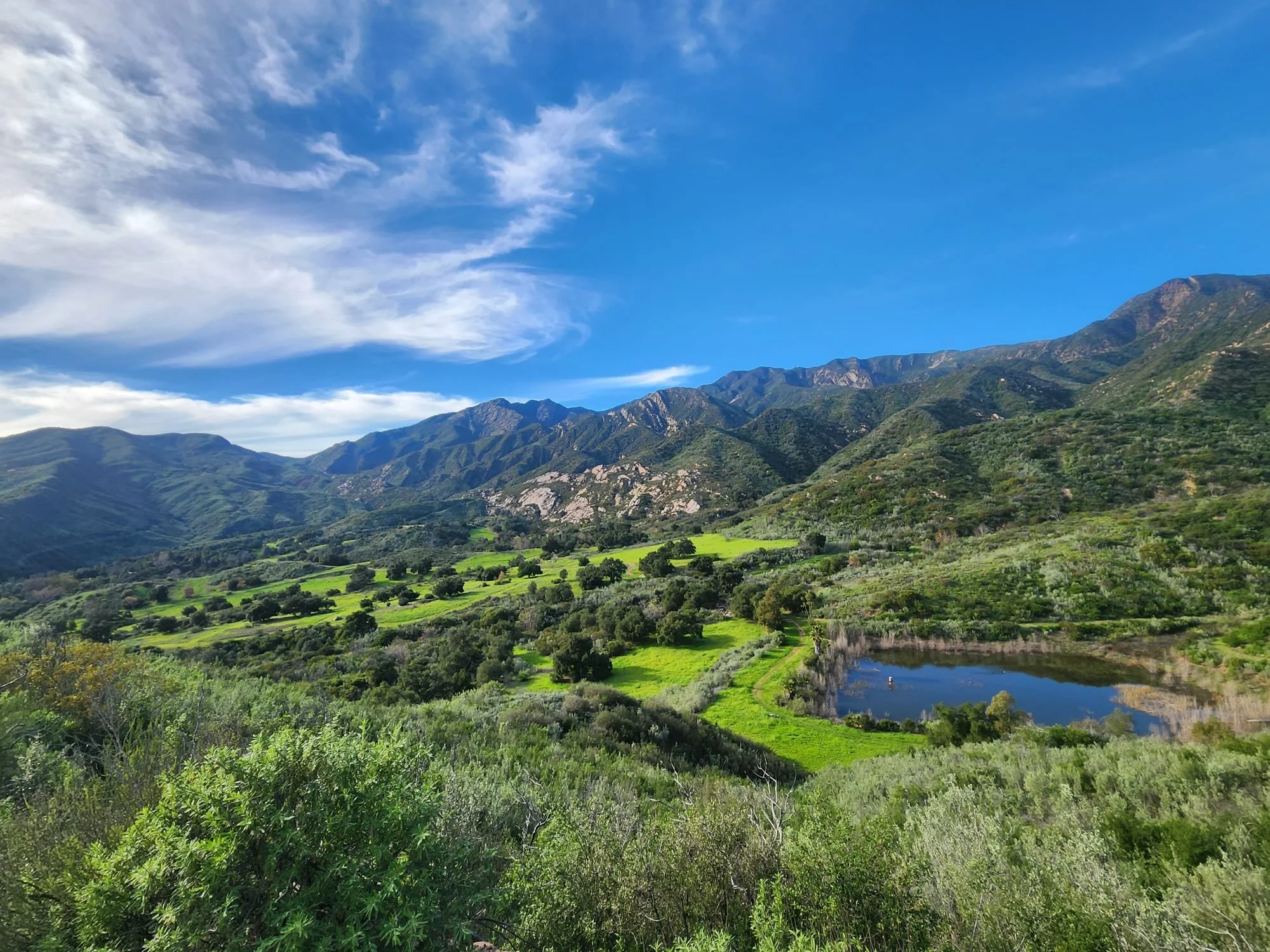
The Taft Gardens & Nature Preserve, located on the ancestral territory of the Chumash People, bordered on 3 sides by the Los Padres National Forest, with 200 acres of our 264 acre Preserve qualifying as Native California Open Space. We are certified with USDA as a native plant crop operation and a registered Conservation Easement with the Human Society Wildlife Land Trust. This legal agreement limits development and holds us accountable for protecting the land’s natural resources and wildlife habitats. This ensures that the majority of our land remains a wildlife corridor, allowing safe passage for animals living on the property and in nearby protected areas.
The Gardens: We maintain 15 acres of curated gardens, walking paths, irrigation systems, and artist studios. Our world-class South African & Australian Gardens, established in the late 1980’s, are adapted to attract a wide variety of bird and pollinator species.
The Preserve: Our preserve contains a variety of habitats, including grasslands, wildflower meadows, California oak woodlands, riparian, coastal scrub and chaparral that we actively steward. We are home to mule deer, black bears, bobcats, mountain lion, gray fox, raccoon, a variety of hawks, egrets, year round and migrating birds and butterflies. There are two ponds that serve as habitat for amphibians, reptiles, ducks, herons, western pond turtle, California red legged frog, coast range newt, and coast horned lizards.
We encourage those who want to be a part of these efforts to get involved by volunteering and attending educational events throughout the year.
OAK WOODLAND RESTORATION

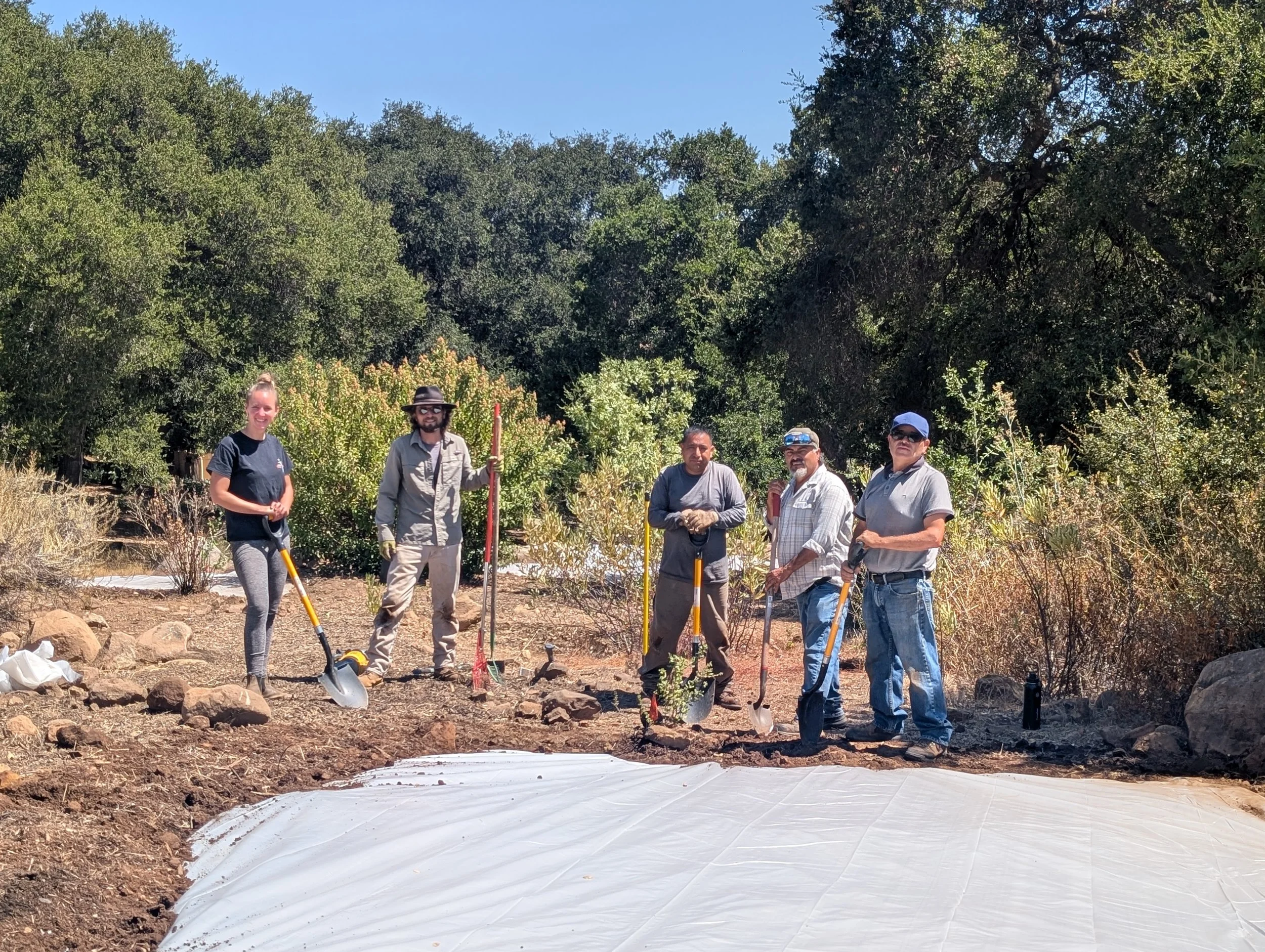
Taft Gardens is collaborating with the Loyola Marymount University Center for Urban Resilience (CURes) to restore 10 acres of oak woodland and native grassland habitat within our 264-acre ecological preserve through a Oak Woodland Wildfire Recovery grant funded by Edison International. This partnership between CURes and Taft Gardens builds on our continued efforts to restore native habitats and build a resilient ecosystem. It aims to accelerate natural recovery from climate change and enhance public awareness of the ecological and cultural significance of oak trees and wildfire resiliency. The project involves planting a California Demonstration Garden, oak woodlands and native grasslands restoration, creating accessible educational materials and programs, and acknowledging the land's indigenous connections.
Oak Woodland Restoration Project Phases
Phase 1 - Planning & Infrastructure: Partnership building, critical water infrastructure improvements, California demonstration garden design, plant list development, cultural surveys, vegetation mapping.
Phase 2 - Implementation: Site Preparation including invasive seedbank solarization, Planting, monitoring & research.
Phase 3 - Education & Outreach (anticipated funding): Expanded education programming, interpretive signage, public dissemination of monitoring findings.
WHITE SAGE RESTORATION


In a pressing effort to combat the White Sage poaching crisis, Taft Gardens & Nature Preserve has partnered with Elena Rios a certified Nature Connection Guide/Mentor, Interdisciplinary Artist/Cultural Practitioner and Wildland Fire Professional with the Chumash Fire Department. to restore the preserve's open space by planting White Sage (Salvia apiana). This initiative directly addresses the global demand for White Sage that is poached and bundled for smudging, then sold in large quantities on marketplaces like Amazon. This has led to a severe decline in wild White Sage populations. The plant's native habitat is unique to a small area stretching from coastal Santa Barbara County to Northern Baja, making it especially vulnerable. Taft Gardens is committed to raising awareness about this poaching crisis and will continue to expand its White Sage restoration efforts on a seasonal basis.
POLLINATOR GARDEN


Our Pollinator Garden was planted to support the native insects, birds, and small mammals responsible for moving pollen from one flower to another, an essential process that allows plants to fertilize and reproduce. This essential process supports the health of the entire ecosystem. Through habitat restoration, research, and educational initiatives, we strive to strengthen the area's pollinator populations. Our goal is to educate the community on the importance of this work in increasing biodiversity and cultivating a more resilient and sustainable landscape.